It’s common to see first-time visitors freeze at the entrance to a Kyoto temple hall, unsure about what to do next. I've watched that same scene play out a hundred times, and it doesn't have to be you.
The truth is, Japan temple etiquette around shoes isn't complicated. It's logical, rooted in genuine respect for sacred space, and once you understand the visual cues, you'll move through any temple or shrine with total confidence.

This guide covers everything: when to remove your shoes, how to behave in different spaces, the mistakes tourists most commonly make, and how to recover gracefully when you slip up—literally or otherwise. For the broader picture on Japanese social customs and unspoken rules, it helps to understand why locals rarely correct visitors publicly, and what that means for you.
If you'd like a full overview before your trip, the Kyoto travel guide is a solid starting point. And for a deeper look at broader Japanese etiquette rules tourists should know, that context will serve you well across every kind of visit.
Let's start with the fundamentals.
Japan Temple Etiquette Shoes: The Short Answer
Let me cut straight to it, because this is what you actually came here to find out.
- Outdoor areas: shoes stay on.
- Indoor halls and tatami rooms: shoes come off.
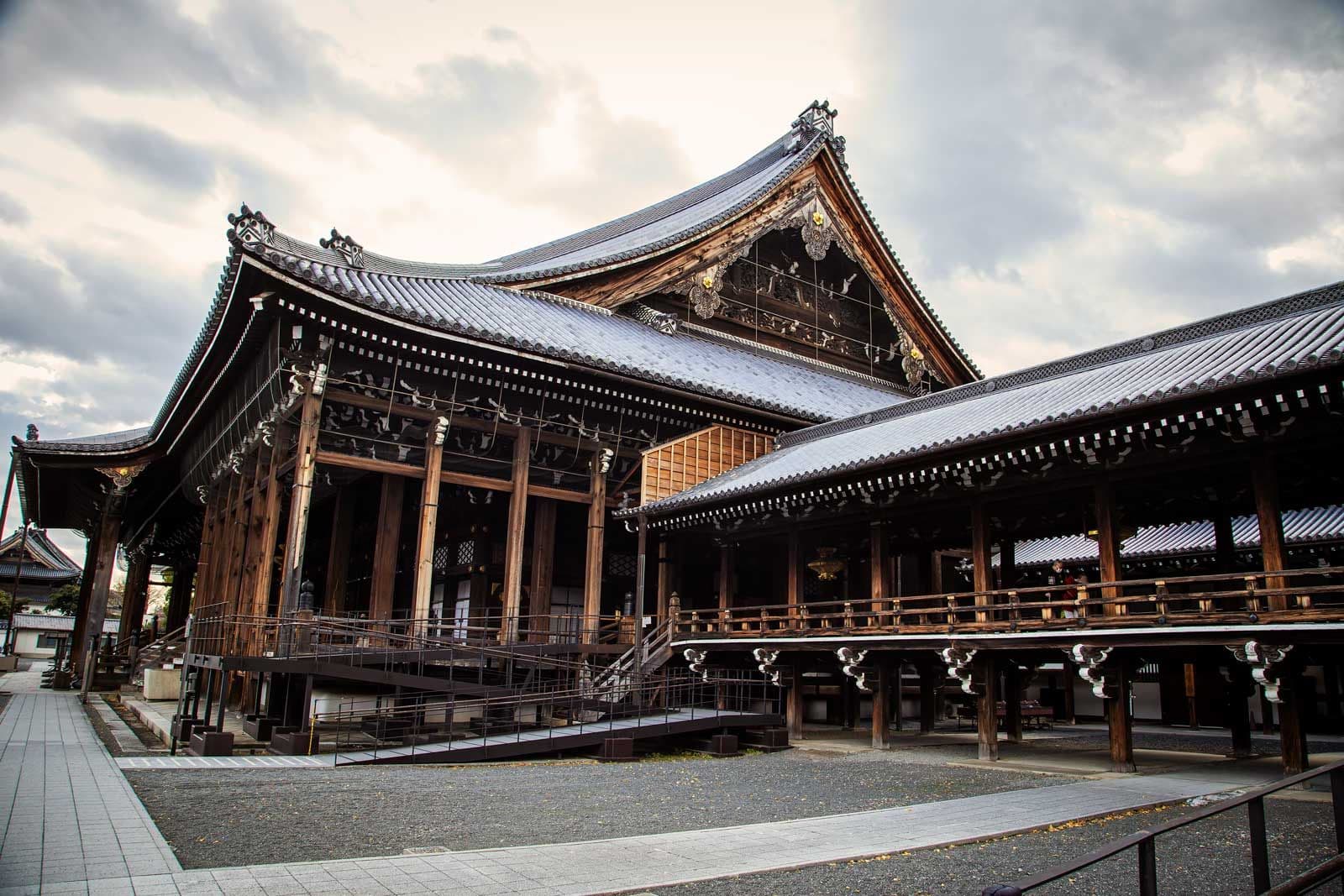
Most temples and shrines provide plastic bags for your shoes if you need to carry them inside. Nishi Honganji in Kyoto has large genkan areas with dedicated shoe shelves—you'll spot them immediately on arrival.
Book accommodation near Kyoto's temple district: Search Available Rooms (opens in new tab)

Outdoor Areas: Shoes On
You walk through the torii gate in your shoes. You walk the gravel pathways in your shoes. You stand in the outer courtyard in your shoes. You climb the stone steps leading to the main building in your shoes.
Shoes stay on as long as you're outside—even when you're well within the temple or shrine grounds.


Indoor Halls and Tatami Rooms: Shoes Off
The moment you enter a covered hall—especially one with a raised wooden threshold called a genkan (玄関)—shoes come off. This applies to:
Main prayer halls (hondo) - Tatami seating areas - Any interior room with wooden or mat flooring - Paid inner sanctums where visitors sit to view gardens or artwork
The genkan is your signal. It's the raised step at the entrance. See shoes lined up outside a door? See that step? Shoes off.
Buddhist Temple Etiquette: From the Sanmon Gate to the Inner Hall
Now let's walk through a Buddhist temple, where Japan temple etiquette around shoes becomes more layered—you may be entering multiple indoor spaces across a single visit.
Entering the Temple Gate (Sanmon)
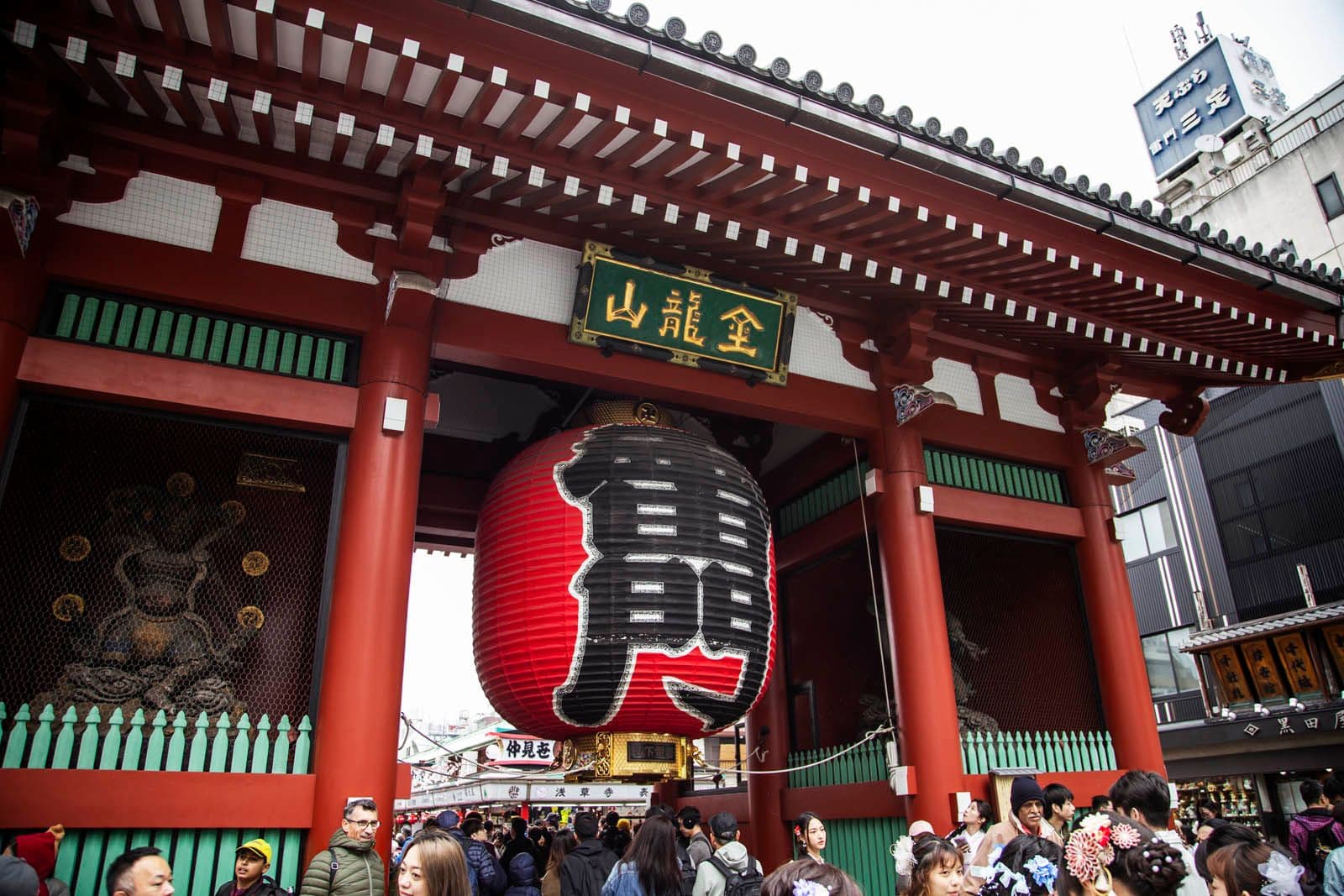
The sanmon (山門) is the main temple gate, often an imposing wooden structure. Bow slightly as you pass through—a gesture of respect as you cross into Buddhist space.

The Incense Burner: How to Use It
Inside the courtyard, you'll likely find a large incense burner (kouro). Here's how to use it respectfully:
- Light a stick of incense (usually available for ¥100–300)
- Never blow out the match - let it burn or gently wave it out
- Place the stick upright in the burner
- Wave the smoke toward you with a gentle fanning motion
In Buddhist tradition, the smoke carries healing properties. This is an act of intention, not just ritual motion.
Removing Your Shoes at the Main Hall
Here's where the genkan matters. Look at the main hall entrance for the raised wooden threshold. Shoes off—always.
Most temples provide plastic bags to carry your shoes if you're walking around inside. If bags aren't available, look for a getabako (下駄箱)—a low cubby shelf where shoes are stored. Leave yours there and note their location.
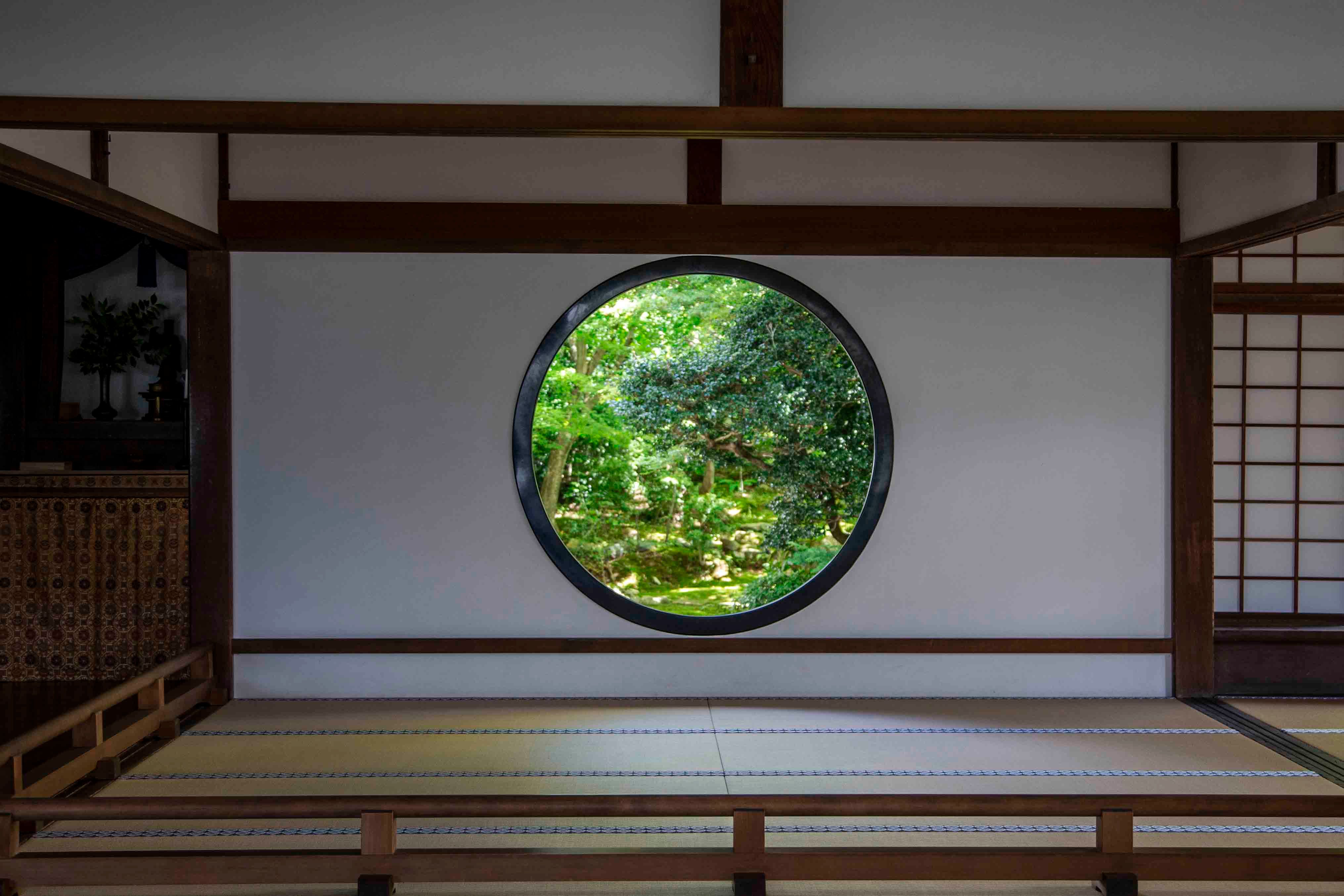
The approach varies by temple. At Kinkaku-ji (Golden Pavilion), the pavilion is viewed from outside, so shoes stay on throughout. At Genko-an Temple, you must remove shoes to enter the main viewing room. At Nishi Honganji, the vast main hall requires shoe removal. At Sensoji Temple in Tokyo's Asakusa, the main hall is partially viewable from a raised step—you don't fully enter barefoot.
How to Pray at a Buddhist Temple
Unlike the Shinto clap-clap sequence, Buddhist prayer is quieter:
- Approach the altar
- Bow deeply—once or twice, depending on what feels right
- Stand in silence for a moment; this stillness is the prayer itself
- Bow once more as you leave
No clapping. No prescribed movements. Just respectful stillness.
Temples vs Shrines: Why the Difference Matters for Japan Temple Etiquette
Before you think about shoes, you need to know what you're actually visiting—because Buddhist temples and Shinto shrines follow different rules.
Buddhist Temples (寺 – tera/ji)
Buddhist temples house statues of the Buddha and often serve as centres for meditation and contemplative practice. Look for incense burners (kouro), pagodas, and cemetery grounds. Temples feel introspective—quiet, with multiple halls serving different purposes.
A good example of a temple where full interior etiquette applies is Genko-an Temple, where removing your shoes and sitting on tatami to view the famous "window of enlightenment" is central to the experience. For a broader survey, Kyoto's most famous temples covers the essential sites worth planning around.

Shinto Shrines (神社 – jinja)
Shinto shrines celebrate Japan's indigenous animistic religion—spirits called kami dwell in nature, trees, and sacred places. Look for red torii gates, shimenawa ropes (twisted straw), ema wishing boards, and gravel pathways. Shrines feel more festive and open, especially during festivals.
Fushimi Inari-Taisha in Kyoto—famous for its thousands of vermillion torii gates—is the quintessential shrine experience.
For authoritative guidance on Shinto shrine protocol, the Association of Shinto Shrines (opens in new tab) maintains official guidance on proper observance.
Book a guided shrine and temple tour: Explore Kyoto with a Local Guide (opens in new tab)

How to Tell Them Apart at a Glance
- Torii gate (the arch) = Shinto shrine, almost certainly. Temples rarely have torii.
- Sandō gravel path = Usually a shrine.
- Large incense burner = Buddhist temple.
- Ema boards (wooden wish tablets) = Shrine.
- Cemetery = Buddhist temple.
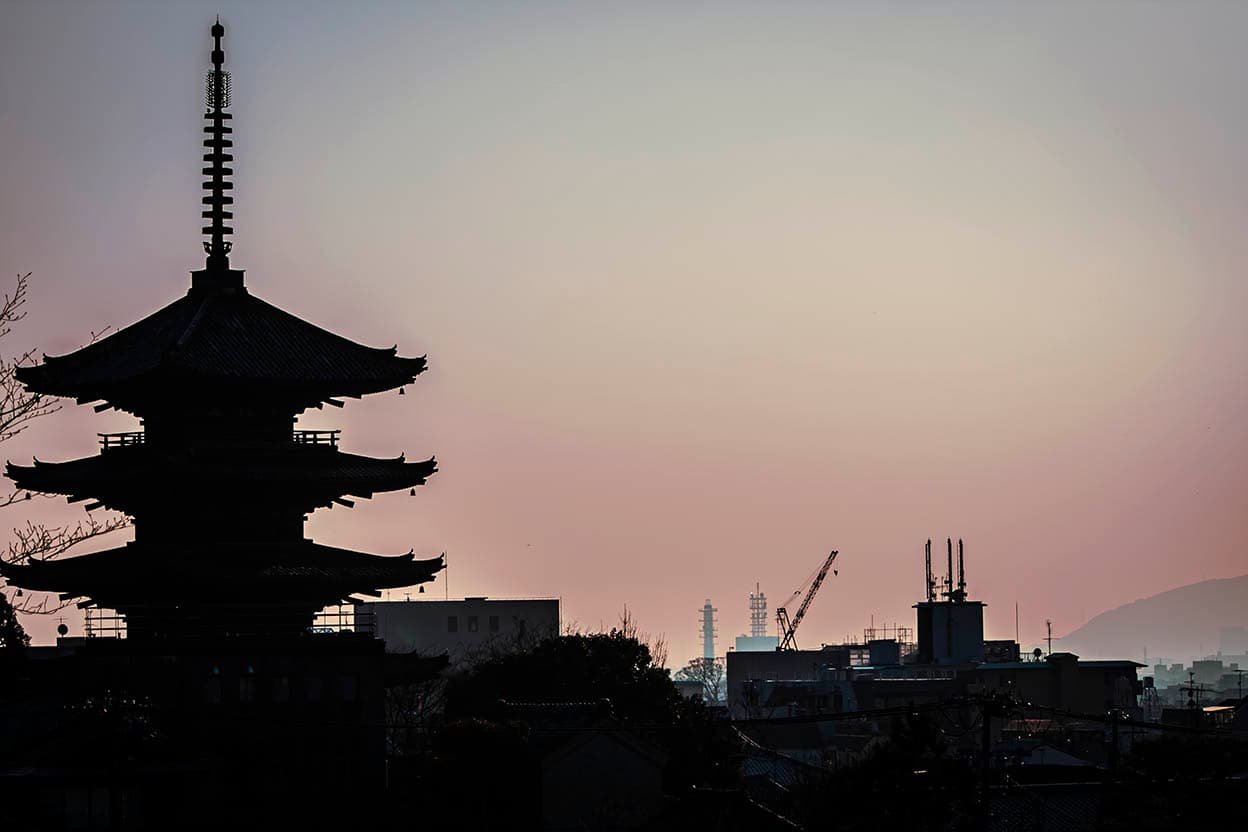
- Pagoda = Buddhist temple.
One cultural note worth keeping in mind: Japanese people rarely correct tourists publicly. If you make an etiquette mistake, locals will notice but won't say anything. This is connected to how Japanese locals view tourist behaviour—it's not indifference, it's discretion. You're free to learn without shame.
If you're planning a dedicated temple day beyond Kyoto, Nara's ancient temples represent Japan's original Buddhist heartland, with eight sites on UNESCO's World Heritage list.
For a thorough breakdown of shrine protocol, the Japan National Tourism Organization's shrines and temples guide (opens in new tab) is worth bookmarking.
 AI Travel Planner
Planning a trip
to Japan?
Get a free personalised itinerary, up to 7-days, built around your dates, group and interests. Created by Kyoto locals with 30+ years in Japan.
What to Do with Your Shoes While Inside
Here's a practical tip: carry a small bag for your shoes in winter. Temple floors are genuinely cold - often unheated from December through February - and some temples don't provide bags. A lightweight canvas or nylon bag (¥300–500) makes a real difference.

Practical Tips: What to Wear and Pack for Temple Visits
Footwear: The Case for Slip-On Shoes
On a full Kyoto temple day, you might remove your shoes five to ten times. Lace-up hiking boots will slow you down and test your patience. Slip-on shoes, Velcro sneakers, or sandals are the practical choice.
Teva-style sandals work well in summer. In winter, zip-up slip-on boots are ideal. Even Japanese visitors wear slip-ons specifically because temple hopping is woven into Kyoto life.
Sock Etiquette: The Rule Nobody Mentions
Here's something most travel guides overlook: Japanese people notice your socks.
Holes, visible dirt, or going barefoot on tatami in formal settings will register as disrespectful, even if nobody says a word. Clean, intact socks are an unwritten requirement. In winter, thermal socks make cold temple floors bearable. During tsuyu (the June rainy season), moisture-wicking socks are worth the small upgrade.
Dress Code: Is There One?
- Japan has no strict dress code at temples. Smart casual is perfectly appropriate - jeans, comfortable shirts, light layers.
- Very short shorts or revealing tops will attract disapproving looks, particularly from older visitors. Dress as you would for a museum, not a beach.
- Hats generally don't need to be removed indoors at temples during casual visits, though you'd take them off for a formal ceremony.
- Got tattoos? Keep them covered! Japanese are sensitive to tattoos are usually associate them to criminals.
A Kyoto 3-day itinerary will help you plan which temples to visit and build in enough time for the shoe-removal moments that punctuate each stop. A handful of useful Japanese phrases for travelers will also serve you well—particularly when reading signage or asking temple staff a question.
For a broader look at how seasons affect what you should pack, see the BBC Travel piece on Japan's most misunderstood etiquette (opens in new tab), which covers some of the same practical ground.
For planning context, see how many days to spend in Kyoto alongside tips for avoiding crowds at Kyoto's temples during peak seasons.
Three Golden Rules for Japan Temple Etiquette Shoes
After half a lifetime in Kyoto, I can distill this entire guide into three principles:
- Look for the raised step (genkan)—that's your shoe-off signal. The architecture tells you what to do. Trust it.
- Outdoor equals shoes on; indoor tatami or wooden halls equal shoes off. Once you see it, it's binary.
- Clean socks, quiet voice, no flash photography. These three things show more respect than any memorised ritual.
The etiquette isn't a set of rules to fear—it's permission to be fully present. Embrace it, and the experience deepens.
For accommodation that carries this same shoe-removal ritual into the evening, a stay at a traditional Kyoto ryokan extends the experience well beyond the temples themselves—the same reverential silence, the same tatami floors, the same unhurried pace.
Go with clean socks, an open mind, and the quiet confidence that you've got this.
FAQs
Do you take your shoes off at Japanese temples and shrines?
At Japanese temples, shoes come off only when entering indoor halls and tatami rooms. The genkan, a raised wooden threshold at hall entrances, is your signal to remove footwear. Outdoor courtyards, gravel paths, and stone steps all keep shoes on. Shinto shrines are almost entirely outdoor spaces, so shoes typically stay on throughout your visit.
What is the correct way to pray at a Shinto shrine in Japan?
The standard Shinto prayer sequence is ni-rei, ni-hakushu, ichi-rei: two deep bows, two hand claps, then one final bow. Before approaching the worship hall, you should purify your hands at the temizuya water basin. Most major shrines like Fushimi Inari have signage explaining the sequence, and watching other visitors makes it easy to follow along.
How can tourists tell a Buddhist temple apart from a Shinto shrine in Japan?
The quickest visual cue is a torii gate, the distinctive arch entrance, which almost always signals a Shinto shrine. Buddhist temples typically feature a large incense burner in the courtyard, pagodas, and often a cemetery on the grounds. Shrine etiquette involves outdoor purification and clapping during prayer, while temple etiquette centres on indoor shoe removal and silent bowing.
What should you wear when visiting temples and shrines in Japan?
Japan has no strict dress code for temple or shrine visits, but smart casual is strongly recommended. Very short shorts or revealing tops will attract disapproving looks, particularly from older visitors. More practically, Japan temple etiquette requires removing shoes repeatedly during a full day of visits, so slip-on shoes and clean, intact socks are essential for both comfort and respect.
Loading Comments...